Dr. Chung Jae-jeong Awarded the Seventh NIHU International Prize in Japanese Studies
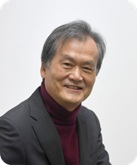
The National Institutes for the Humanities (NIHU) is pleased to announce Dr. Chung Jae-jeong, Professor Emeritus at the University of Seoul, as the winner of the seventh NIHU International Prize in Japanese Studies.
Over many years, Dr. Chung has produced a distinguished body of empirically grounded scholarship on the history of Japan-Korea relations and modern Japanese and Korean history, making major contributions to research in the field. Building on his outstanding research, Dr. Chung has sought to engage in historical dialogue between Japan and Korea, endeavored to overcome differences in historical perceptions between the two countries, and contributed significantly to the cultivation of mutual trust within the community of Japan-Korea historians. In addition, through his many years of teaching at the University of Seoul and as a visiting professor at institutions such as the University of Tokyo, Tohoku University, Hokkaido University, and the International Research Center for Japanese Studies, Dr. Chung has been instrumental in fostering the next generation of scholars, thereby contributing to the international development of Japanese studies in both Japan and Korea. (For details, see “Achievements and Reasons for Awarding,” compiled by screening committee chair KONDO Yasuhiro below.)
NIHU is looking forward to engaging with Dr. Chung at the award ceremony and commemorative lecture to be held at the Japan Academy in Ueno, Tokyo on January 28, 2026.
This is the seventh award conferred since NIHU established the prize in 2019 with the support of the Kuraray Foundation. Outstanding scholars from both within Japan and abroad have been recommended, allowing for smooth screening of qualified candidates. NIHU is deeply grateful to all those who have supported this prize and share its aims. To date, the award has been conferred upon two male scholars active in Europe, three male scholars active in North America, and one female scholar active in North America. However, this year marks the first time that a recipient from Asia has been selected. The screening committee hopes to see a diverse range of scholars nominated for the award, including with respect to gender and region, and welcomes further nominations.
Text: WAKAO Masaki, Executive Director, NIHU
Achievements and Reasons for the Award
Dr. Chung Jae-jeong is one of Korea’s leading scholars of modern and contemporary Korea-Japan history who has long devoted himself to advancing academic and cultural exchange between the two countries and deepening mutual understanding. Most notably, his book Ilje chimryak gwa hankuk cheoldo: 1892–1945 (1999; The Colonial Rule of Imperial Japan and Korean Railways, 1892–1945; Japanese translation by Mitsuhashi Hiroo, Akashi Shoten, 2008), which examines the history of railways on the Korean Peninsula during the period of Japanese rule, portrays the dual and contradictory aspects of colonial governance, namely its “exploitative” and “modernizing” dimensions. Through empirical analysis, this landmark scholarly achievement elucidates the limitations of colonial modernization theory and offers a balanced historical perspective. Drawing on an extensive body of railway-related historical materials, Dr. Chung’s work opened up a new phase in modern Korean historical research and established a shared foundation for debate among researchers in Japan and Korea.
Beyond his role as a researcher, Dr. Chung has made major contributions to the improvement of history education in Japan and Korea and to the improvement of perceptions of history. Since the Japanese textbook controversies of 1982, he has consistently sought to improve bilateral relations through history education, confronting complex challenges head-on within the Korea-Japan Joint History Research Committee as a steering committee member and in a principal coordinating role. Even amid periods of heightened tension between the two nations, he upheld academic neutrality and exercised calm judgment, preserving spaces for dialogue between historians of on both sides. His balanced perspective and earnest approach, demonstrated in his editorial and authorial contributions to a volume produced by researchers and teachers of Japan-Korea history, A Shared Resource for Teaching Japan-Korea History: Japan-Korea Exchange from Prehistory to the Present (edited by a history education research group (Japan) and a history textbook research group (Korea), Akashi Shoten, 2007), have provided a model for many younger scholars. Furthermore, from 2009 to 2012, he served as President of the Northeast Asian History Foundation of the Korean government, where he worked to expand regional research networks, including those involving China, and to promote peaceful relations in East Asia.
Dr. Chung’s scholarly output, encompassing dozens of publications, has been widely disseminated not only in Korean and Japanese, but also in English, German, and other languages, earning high international praise. His achievements are also significant through educational activities at the University of Seoul, the University of Tokyo, and other institutions, where he has trained numerous young scholars in both Japan and Korea, thereby laying a foundation for lasting people-to-people exchange that extends beyond academia.
Dr. Chung is a practitioner committed to using scholarship for the benefit of society. Through activities such as lectures on history for representatives of Japanese companies stationed in Korea, he has fostered mutual understanding on the ground and emphasized the importance of engaging with history firsthand. Dr. Chung’s approach bridges research and practice, positioning him as a “knowledge diplomat” who transcends the conventional role of scholar.
The year 2025 marked the 60th anniversary of the normalization of diplomatic relations between Japan and Korea. In that commemorative year, it is hoped that honoring Dr. Chung’s half-century of dedicated effort and his scholarly and societal contributions will serve as an inspiration for the future of both countries.
The screening committee is pleased to announce that Dr. Chung Jae-jeong, a scholar whose outstanding accomplishments span academia, society, and education, has been selected as the seventh recipient of the NIHU International Prize in Japanese Studies.
The Result of the NIHU International Prize in Japanese Studies 2025