
Interview with Liberal Arts Communicator Raditya Nuradi
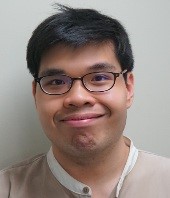
Liberal Arts Communicator Raditya Nuradi
(National Museum of Japanese History)
Encountering Japanese Religions and Culture
I first came to Japan around 2015. At the time, I was an undergraduate studying in the United States and majoring in digital art. An interest in Japanese culture led me to participate in a one-year short-term exchange program, and as I learned about various aspects of Japan, I was struck by how religion both there and in the West differed from how religion is understood in my home country, Indonesia. In Indonesia, religions are identified as government-recognized organizations, and belonging to one of these organizations is what determines one’s religion. Affiliation is considered most important; whether one personally believes or engages in religious practice is secondary. Although I had already lived in the United States for two years and had encountered forms of religion very different from those in Indonesia, I had not yet given much thought to the subject.
What inspired me to begin thinking about religion after arriving in Japan was Studio Ghibli’s film Princess Mononoke. After taking a course that explored and analyzed Ghibli films, I began watching its other works. Through these, I noticed that culture and what might be called “belief,” rather than organized religion, were portrayed as closely intertwined. I began to visit Shinto shrines and Buddhist temples, and it occurred to me that, simply put, religion does not necessarily mean being affiliated with a particular organization. From that point on, my interest in and curiosity about religion gradually deepened.
Research Theme and Its Appeal: Seichi Junrei (Pilgrimages to Key Locations That Appear in Anime and Manga)
My current research theme is one I have been pursuing since my master’s program. Because my initial interest began with Studio Ghibli, I first considered researching a topic similar to that of my predecessor, Joachim Alt, who also worked as a liberal arts communicator. I wanted to examine how religion was expressed not only in Ghibli films but also in anime more broadly. However, I soon realized that a large body of research already existed in this area. I also came to understand that the way religion is expressed in a film—the production team’s intended message—does not necessarily equate to the way it influences or is interpreted by audiences. This led me to wonder about religious expression in real-world settings. I found myself becoming increasingly interested in the observances and events taking place at actual sites, and eventually I learned about the phenomenon of seichi junrei—visits by fans to locations that appear in anime and manga. I came to feel this practice would be a more compelling research theme, and after visiting various sites and speaking with many people, my research naturally shifted toward the study of these popular-culture pilgrimages.
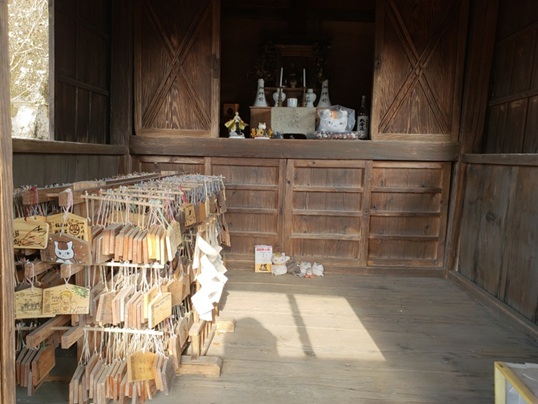
My research focuses on Yuwaku Onsen in Kanazawa. Every year in late October, the Yuwaku Bonbori Festival is held there. The festival, which has been running for 14 years (as of 2025), is a real-life recreation of one that appears in the anime series Hanasaku Iroha. It has become my primary site for field research. According to local residents—particularly members of the tourism association and anime fans—the festival was not originally intended to be an annual event. Rather, it began as a sort of wrap-up celebration following the end of the Hanasaku Iroha anime broadcast. However, turnout far exceeded expectations, and the fervent support of fans led to the festival being held almost every year. It has become a noteworthy example of how fan enthusiasm can sustain local events.
What makes the festival particularly interesting is that it is organized and run almost entirely by volunteers and fans rather than local residents. As a result, with the exception of the local tourism association, most people in the community do not know in advance what the organizers will do, when events will occur, or what exactly will take place. Of course, the local community supports the festival in various ways outside of direct management, but I find it very interesting that the actual work is handled primarily by fans together with the tourism association. To return to the subject of stories, there has been a movement to cast the festival as something rooted in the local community. While I hesitate to use the term “selling a narrative,” I do find it interesting to see the emergence of such publicity efforts.
The most compelling aspects of this research, for me, are the relationships among place, narrative, and people. Seichi junrei is not limited to the world of anime. Rituals that involve travel tend to be shaped—though not universally—by these three elements and their intricate interrelationship. During my fieldwork and through many conversations on-site, I realized that when only one of these elements is present, something is lacking. A place alone is not enough; a narrative alone also feels incomplete. It is only when all three come together that a person feels the impulse to make the journey. Some might think people—anime fans—are the primary element in seichi junrei, but in reality, the place and its accompanying narrative are just as important. “Narrative” can be broadly interpreted to include many types of stories, and the place itself can serve as one of those stories. For instance, the imagined landscape of tourism—the images shaped by brochures or other promotional materials—does not always match the actual location. I find it particularly intriguing that the act of traveling with that unreal image in mind, and then encountering and experiencing what is truly there, becomes the ritual itself.
Podcasting as a Link Between Research and Public Outreach
I am also a podcast host for New Books Network, where I conduct interviews with Japan scholars on a wide range of topics. Podcasting is a form of what is often called “public scholarship”—scholarly engagement aimed at a general audience. I believe that research in the humanities in particular, regardless of the specific topic, has an important role to play for humanity, and especially for contemporary society. Unfortunately, however, scholars often write in ways that can make the content difficult for readers without background knowledge to grasp. This is why I think it is important to present research in ways that help non-specialists recognize its value. For example, The Immanent Frame, a publication associated with the Social Science Research Council, incorporates contributions from early career researchers and distills academic research on religion into articles for general readership. It is a simple and highly accessible model. This is what public scholarship aims to do, and I see podcasting as part of the same broader effort.
Rather than simply introducing seichi junrei as a type of pilgrimage, I want to use [the act of] pilgrimage as a lens to examine contemporary social issues such as gender or immigration. In [the field of] otaku studies as well, there are fundamental questions related to “otherness”—what we even mean by “the other”—and these are deeply rooted fundamental research in and knowledge of the liberal arts. I hope to share such perspectives with broader audiences, little by little. Rather than simply presenting findings in the humanities, I believe it is important to communicate these ideas in ways that encourage critical thinking. Podcasting offers a way to communicate with the public that differs from the methods used in the natural sciences. It allows for another form of dialogue—one that brings humanities-based knowledge into conversation with society.
How I Came to Apply for the Position of Liberal Arts Communicator at the National Museum of Japanese History (Rekihaku)
I was aware of the existence of the Liberal Arts Communicator role from the time I began looking for jobs, and I thought it was an intriguing opportunity. When this round of recruitment began, I decided to look into it more closely. I read the profiles and interviews of previous Liberal Arts Communicators and came to have a clearer sense of what the position entails.
Personally, I believe Liberal Arts Communicators play a crucial role. In Japan, there are almost no postdoctoral positions in the humanities; the University of Tokyo’s Tokyo College is one of the few examples in recent years that comes to mind. It is possible to move from part-time lecturer positions into a full-time teaching position, but the balance among research, teaching, and the kind of public scholarship I mentioned earlier tends to be very uneven. As a part-time lecturer, one has almost no time for research. Conversely, when one is affiliated with a research institute, research becomes the primary focus, with little time left for teaching or public scholarship. It seems to me that Liberal Arts Communicators are fundamentally expected to engage in all three areas. In Japan especially, this balance is extremely rare, and I feel it is a valuable and important model.
Activities at Rekihaku and Future Plans as a Liberal Arts Communicator
One of my main responsibilities will be supervising the English translations of the museum’s publication series Rekihaku. Although my formal affiliation will be with the Research Department, I will also work closely with the Public Relations Office. This will likely involve attending meetings with PR staff and participating in discussions about exhibition models and their plans and concepts, working together to consider what forms or approaches might be most effective in helping the public understand the museum’s work. I will also be called upon to assist when overseas guests visit the museum.
Previous Liberal Arts Communicators have contributed articles to the NIHU online column “Kurashi ni jinbunchi”(“The Humanities in Everyday Life”); if possible, I would like to introduce their research through podcast interviews. I also hope to develop a clear and accessible series that answers the question, “What exactly is humanities knowledge?” The fields in which Liberal Arts Communicators work differ widely: some pursue research that focuses on archival and material sources, while others, like myself and Kudo Sakura at the National Museum of Ethnology, conduct fieldwork-based studies. Still others, such as Sawazaki Kenichi at the Research Institute for Humanity and Nature, use entirely different methodologies. I want to help the broader public understand that this diversity of approaches is one of the humanities’ strengths, and I hope to engage in activities that communicate this breadth and richness.
(Interviewer: OHBA Go, Researcher, Center for Innovative Research, National Institutes for the Humanities)
Raditya Nuradi
Specially Appointed Assistant Professor, National Museum of Japanese History
Raditya Nuradi specializes in contemporary Japanese religions, with a particular focus on the relationship between religion and pop culture. His research employs ethnographic methods to examine how “place,” “objects,” and “narrative” intersect in the contemporary seichi junrei phenomenon in popular culture, and what kinds of meanings are produced through these connections. Through the phenomenon of pilgrimage, he also explores, from an interdisciplinary perspective, how Japan is linked to the wider world. Because the term “religion” is not especially familiar in contemporary Japanese society, he hopes his research will help broaden the scope and public understanding of the concept.